The Make-or-Break Decision Facing Warehouse Managers
It's halfway through second shift when one of your forklifts starts acting sluggish. Your in-house tech is on site, but is this their call to make? For large 3PL operations running their own maintenance teams alongside dealer relationships, this scenario plays out regularly—and the wrong choice can mean extended downtime or voided warranties.
Most forklift fleets rely entirely on dealer technicians for maintenance and repairs. But many large operations hire their own technicians to handle day-to-day issues while reserving dealer support for specialized work. The challenge is knowing where to draw that line.
Rob Jackson, service manager with Abel Womack, an authorized Raymond solutions and support center operating across New England and New York, sees this balancing act constantly. Dealer technicians undergo extensive formal training both at their workplace and often at manufacturer facilities, giving them access to specialized knowledge and diagnostic tools that in-house teams typically lack.
What Dealer Technicians Actually Do
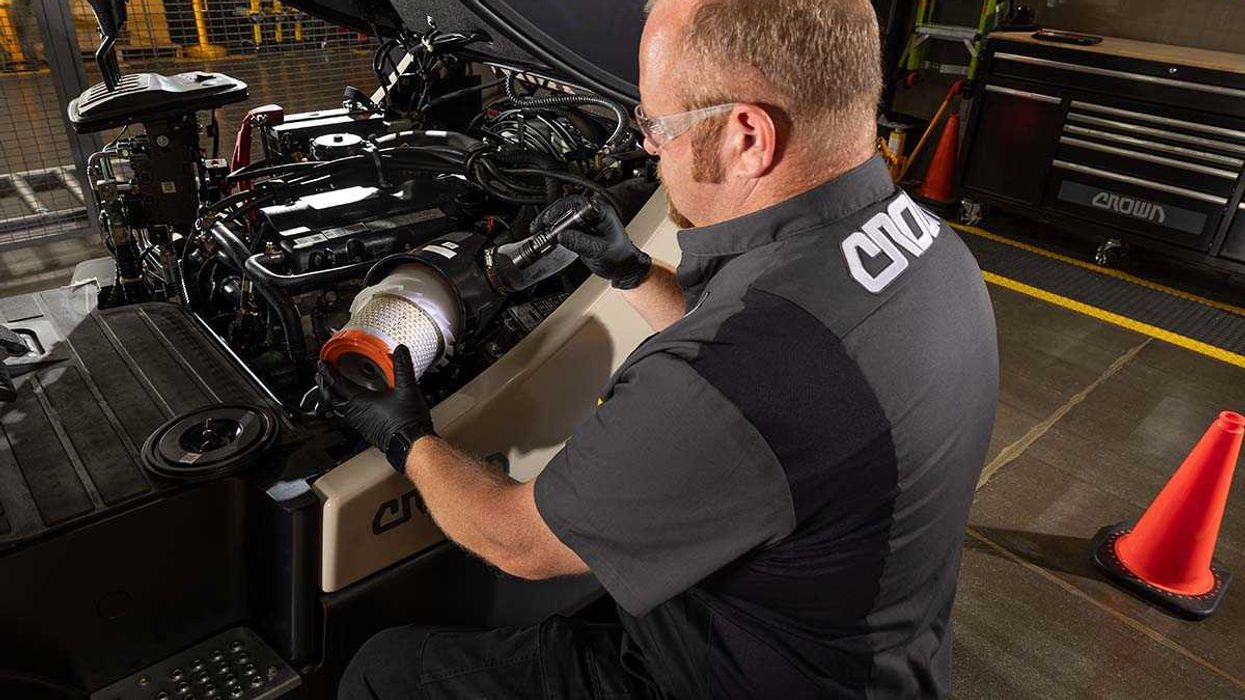
Modern forklift technicians handle planned maintenance, diagnostics, and repairs using tablets, mobile phones, and laptops to access repair manuals and troubleshooting protocols. Their planned maintenance work is comprehensive: testing all functions including travel, lifting, braking, and acceleration; changing filters and fluids; lubricating mechanical components like axles, bearings, and masts; and inspecting everything from hoses and cables to tires, batteries, and forks for damage or wear.
The work varies by truck class and model, with some items checked during every service visit and others inspected at longer intervals—much like scheduled car maintenance, but with significantly higher stakes for warehouse operations.
Drawing the Line on In-House Repairs
The decision on who handles what typically comes down to complexity, equipment access, and warranty considerations. In-house technicians can effectively manage routine maintenance tasks, basic diagnostics, and simple mechanical repairs. But when issues involve complex electrical systems, manufacturer-specific components, or work that could affect warranty coverage, bringing in dealer technicians becomes essential.
For that sluggish forklift on second shift? The answer depends on your team's diagnostic capabilities and the specific symptoms. Simple issues like low fluid levels or visible mechanical problems might warrant immediate in-house attention. But electrical gremlins, performance issues without obvious causes, or anything involving the truck's computer systems typically mean tagging the unit out of service and calling the dealer in the morning.